

 High-quality training plays a pivotal role in whether organizational change becomes meaningful or remains superficial. In many environments, frameworks like Scrum or Agile are introduced, but without a deep understanding of their purpose and systemic implications, adoption often stays at the level of rituals and terminology. Effective training addresses this gap by reshaping how individuals think about work, value, and organizational dynamics—not just how they execute processes. The approach reflected across these offerings is grounded in a high level of professionalism and seniority, combining decades of real-world experience with a systems-oriented perspective. Rather than treating topics as isolated domains, the training connects multiple layers of the organization. Foundational sessions revisit Scrum not as a checklist of ceremonies, but as a discipline that requires clarity of purpose and proper application. From there, Large-Scale Scrum (LeSS) expands the conversation into multi-team environments, focusing on organizational design, coordination, and the removal of structural impediments that prevent true scalability.
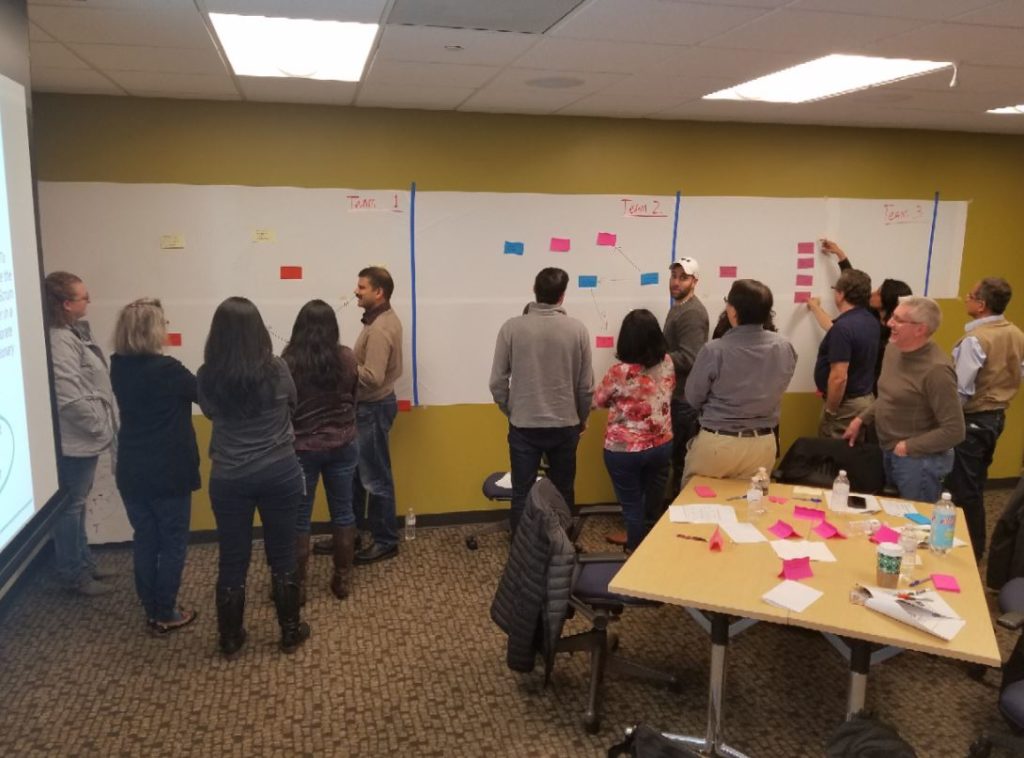
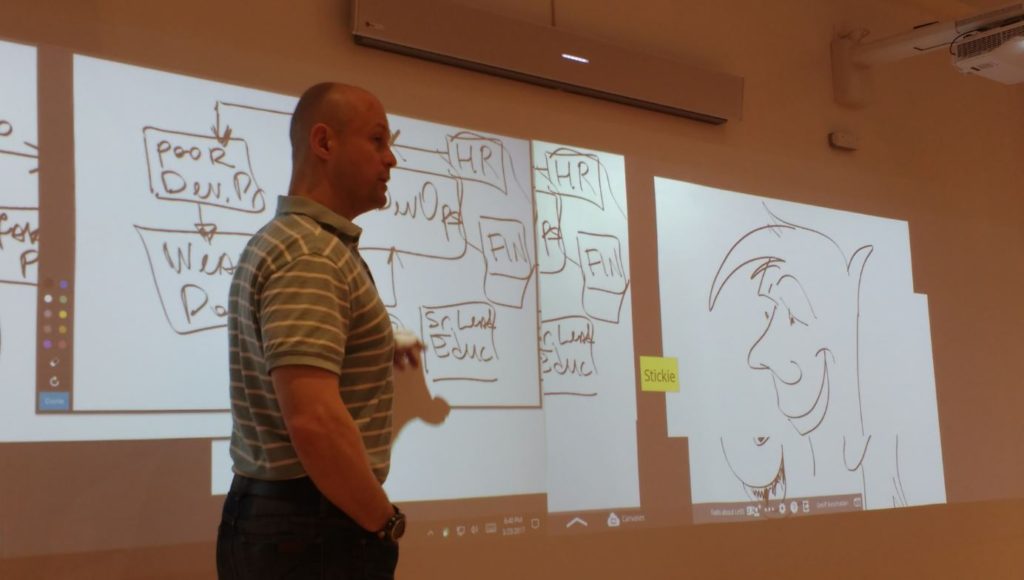
This perspective is reinforced through product-focused training, where the emphasis shifts to discovery and definition. Here, participants are challenged to rethink what a product is, how it is defined, and how customer value is continuously explored and validated. At the executive level, organizational design workshops further elevate the discussion, helping leaders understand how structures, governance, and funding models influence behavior across the system.
Lean Portfolio Management (LPM) brings these elements together by linking strategy to execution. It introduces a more adaptive approach to planning and investment, enabling organizations to move gradually away from rigid project-based models toward continuous value delivery—while still operating within existing constraints.
Across all of these areas, the distinguishing characteristic of the training is its ability to bridge theory with practice. It does not promote quick fixes or prescriptive frameworks, but instead builds a deeper capability within the organization. In doing so, training becomes more than knowledge transfer—it becomes a foundational mechanism for enabling thoughtful, sustainable transformation.
Thank you for your message!
You should receive a response to your inquiry within 24-48 hours since the moment of submission. Thank you.
Sorry, there has been a problem and your message was not sent.
Please, use the form below to submit your inquiry. If you are interested in training, coaching or consulting support, please provide, as much information as you can in the 'Message' field below: