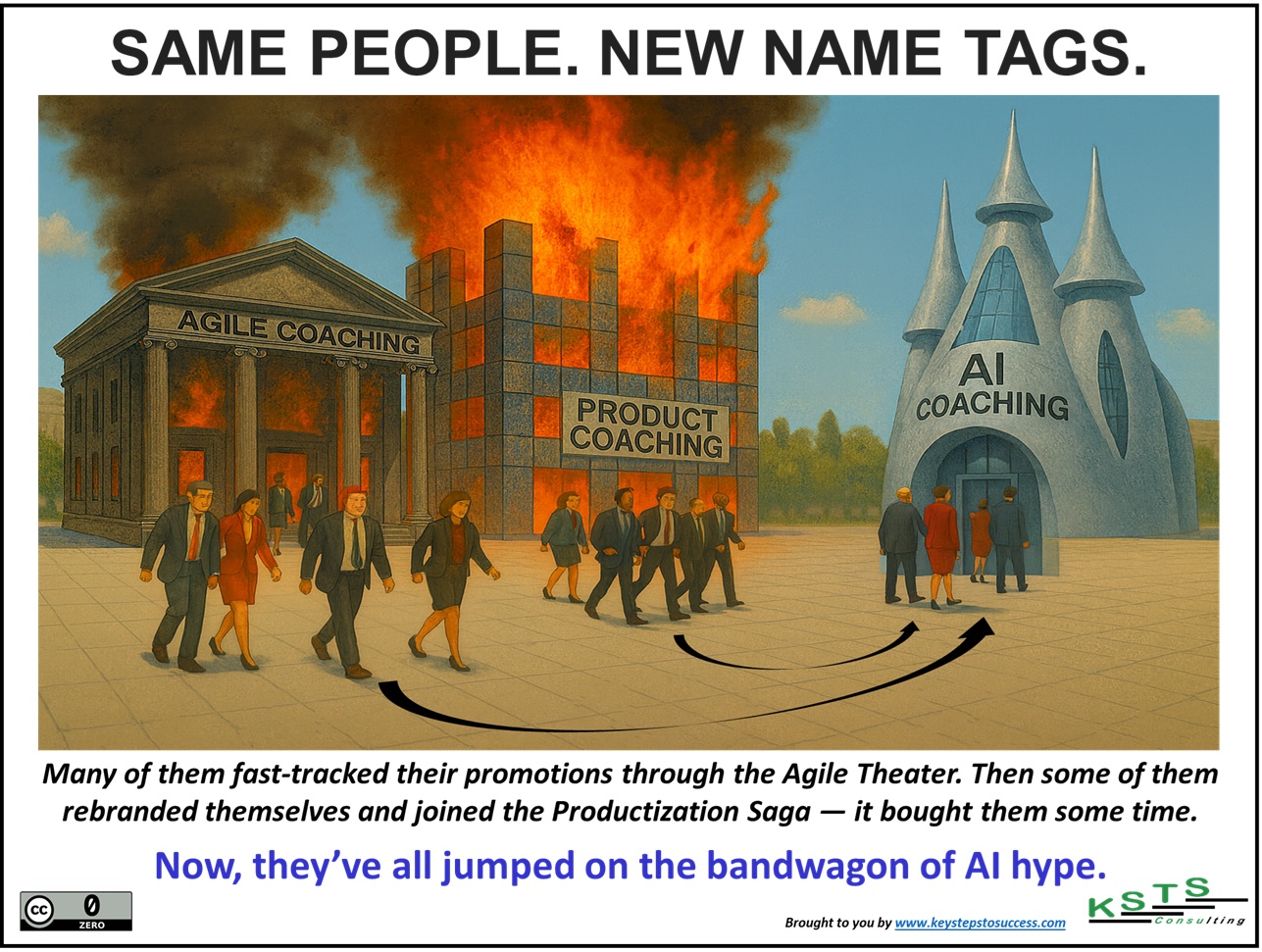
In the coaching world—whether Agile, Product, or the latest AI-flavored variation—not everyone arrives with the same depth of experience. Over the years, many individuals have advanced rapidly by capitalizing on trends rather than developing true mastery. Titles have changed, but the underlying pattern has not. The trend shifted from Agile to Product theme, and now to AI, and with each shift came a wave of people quickly rebranding themselves to stay relevant. Same people, with new name tags and same skill gaps.
This accelerated path often begins when traditional career progression ambitions. Faced with otherwise, slow promotions, individuals try reinvent themselves almost overnight: first as Agile Coaches, then as Product Coaches, and now as AI Coaches. Each relabeling buys a little more time and creates the appearance of natural evolution and newly gained expertise. Yet the underlying issue remains the same: an old candy in a new wrapping paper, with speed of title switching, by far, outpacing capability. The result is a cycle of shallow reinvention driven by hype, not by meaningful professional growth.
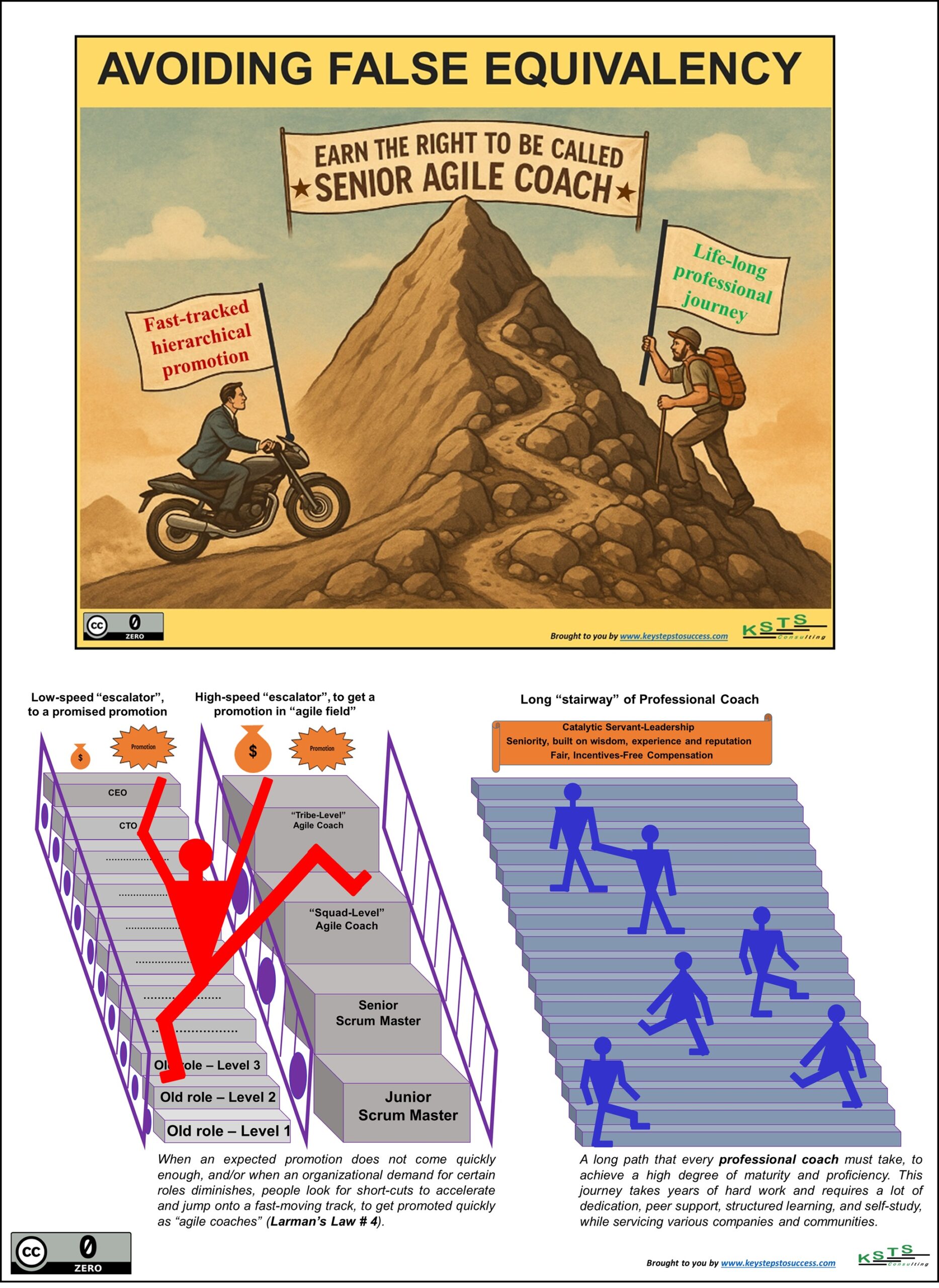
Contrast this with the long, disciplined journey of true coaching professionals. Their development cannot be rushed or repackaged. It comes from years of practical experience with real teams, deep study of organizational behavior, rigorous self-reflection, and continuous learning across multiple domains. These coaches grow through mentorship, community engagement, and the humility of knowing that expertise is earned, not claimed. Their credibility comes not from trend-chasing but from the steady accumulation of wisdom and maturity.
The difference between these two paths is significant. The fast track produces individuals who change labels as quickly as the market shifts, often creating confusion and inconsistency in the organizations they serve. Meanwhile, the professional journey produces coaches who bring stability, depth, and clarity—people who can guide teams through complexity because they have lived it, not just named it.
As new hype cycles emerge, the temptation to rebrand grows stronger. But the industry does not need more title flippers; it needs more genuine practitioners committed to the craft. Titles may come and go, but real coaching capability is not trend-dependent.
The essential question remains:
Do we want coaches who evolve with every fad, or coaches who grow through experience, discipline, and long-term dedication?
Only the latter path produces coaches worthy of the trust organizations place in them.