When Organizations Get the Product Owner Role Wrong
When organizations begin adopting lean, agile ways of working, there is usually a moment that quietly determines whether the entire effort has a real chance of succeeding or is already heading toward disappointment. Oddly enough, it is not the tooling decision, the framework selection, or even the training budget. It is the moment when someone asks: “So… who is going to be the Product Owner?”
At first glance, the question sounds operational, almost administrative. But in reality, it is deeply strategic. The Product Owner role is not just another title to assign or another seat to fill on an org chart. It is one of the foundational pillars upon which the entire system depends. Get this role wrong, and teams quickly become trapped in confusion, bureaucracy, conflicting priorities, endless coordination, and performative agility. Get it right, and something very different begins to emerge — teams gain clarity, decisions become faster, customer focus sharpens, and delivery starts connecting to actual business outcomes instead of internal process theater.
Unfortunately, many organizations still struggle badly at this exact point.
And the irony is that the people selected for the role are often hardworking, intelligent, and well-intentioned professionals. The problem is usually not the individual. The problem is role alignment.
The Wrong Choice: A Product Owner in Name Only
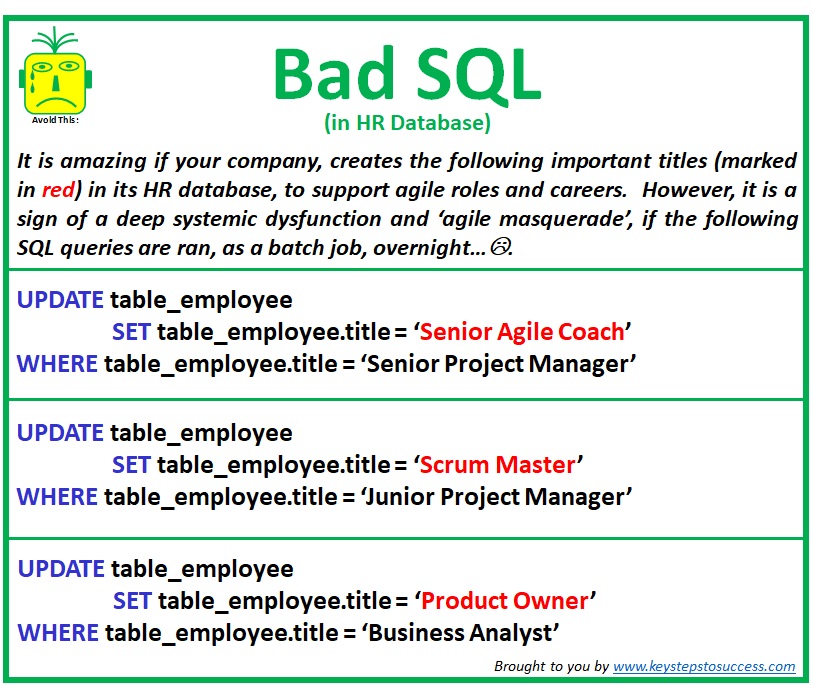
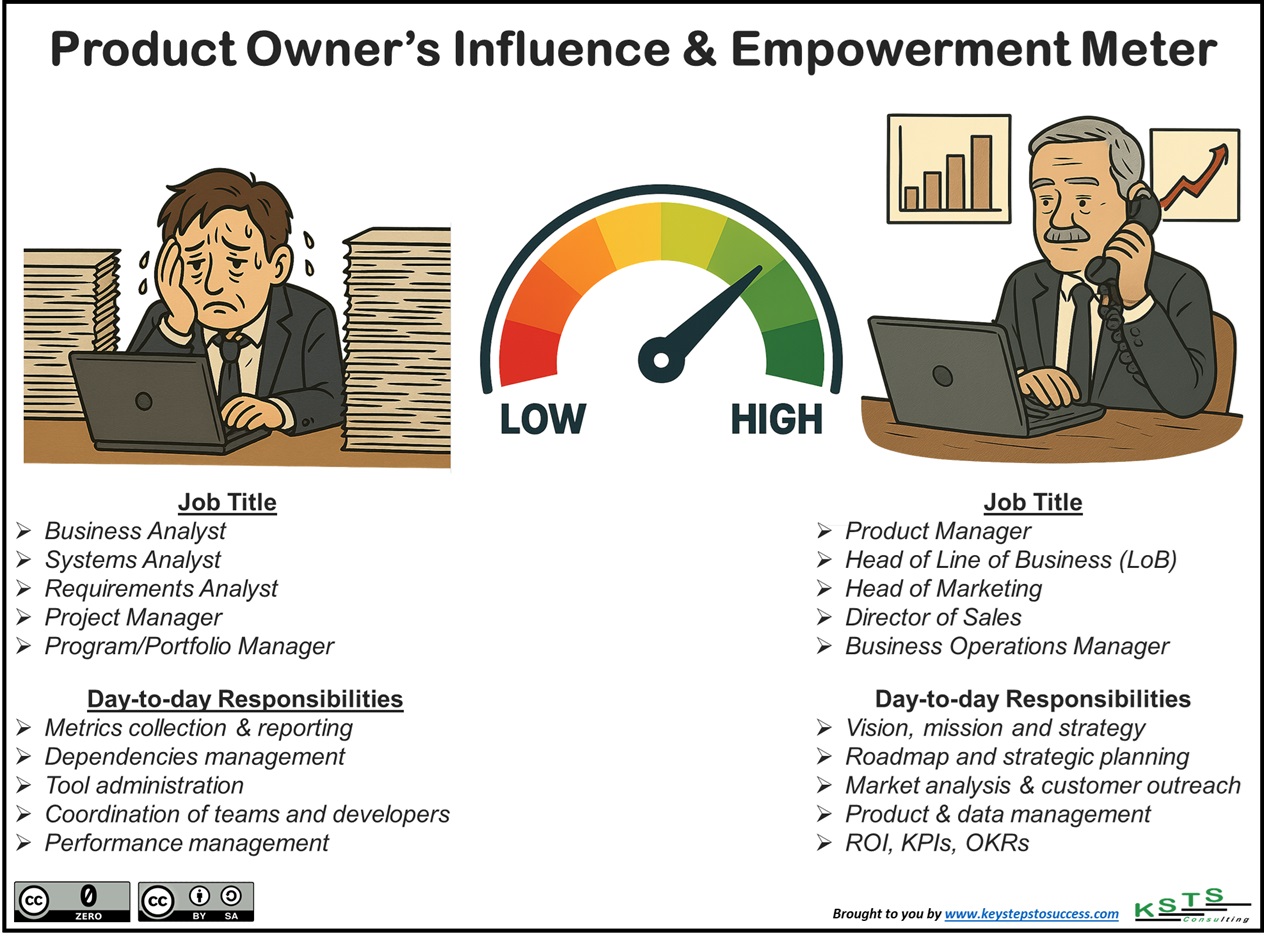
In many companies, the Product Owner role quietly becomes a landing spot for legacy positions. A Business Analyst gets reassigned. A Systems Analyst gets renamed. A Project Manager transitions into the role after a two-day certification class. Sometimes even Portfolio Managers or coordinators are placed into the seat simply because they are available and already close to delivery operations. On paper, it appears logical. These individuals know the organization, understand requirements, speak with teams, attend meetings, and are already involved in delivery workflows. But the deeper question is this: are they actually positioned to own a product?
More often than not, the answer is no.
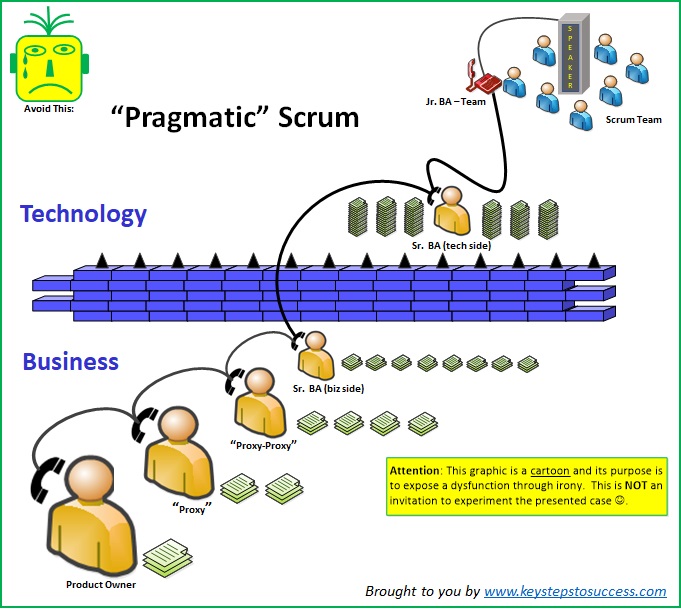
These traditional roles were generally designed around coordination, documentation, administration, reporting, and operational continuity — not around customer value, strategic product direction, or business accountability. Their day-to-day world often revolves around tracking dependencies across siloed teams, maintaining tools and workflows, collecting metrics that describe the past, coordinating calendars, escalating delivery issues, and managing execution logistics. That work may absolutely be useful in certain environments. But it is not product ownership.
A true Product Owner must be empowered to make difficult prioritization decisions, shape direction, reject low-value ideas, balance customer outcomes against business constraints, and carry accountability for results. Many of the individuals placed into these proxy-style Product Owner roles simply do not have that level of authority or influence within the organization.
And yet, organizations hand them the title anyway.
A short certification course later, the transformation slides look complete. The boxes on the operating model diagram are filled. Leadership feels momentum. Budgets get approved. Everybody says the right words. But underneath the surface, very little has fundamentally changed.
This is how organizations drift into transactional agility — an environment where the ceremonies exist, the Jira boards are populated, the backlog refinement meetings happen religiously, and dashboards look impressive, but meaningful customer value remains strangely absent. You get activity without ownership. Process without empowerment. Motion without direction. And eventually, people start wondering why the transformation feels hollow.
The Right Choice: A Product Owner with Strategic Muscle
Now contrast that with a very different type of Product Owner.
This is someone whose professional world already revolves around business outcomes, customer understanding, strategic thinking, and market impact. They may come from product management, business operations, marketing leadership, sales leadership, or a line-of-business ownership role. Their language naturally includes concepts like customer value, ROI, market fit, competitive positioning, KPIs, and long-term product direction because those concerns are already embedded into how they operate. These individuals tend to carry something extremely important: organizational gravity. They are used to making difficult tradeoff decisions. They are comfortable saying “no.” They understand that prioritization means disappointing some people in order to create clarity for others. They are connected to real customer problems, real business pressures, and real market dynamics. Most importantly, they possess both influence and accountability.
This changes everything. Instead of functioning as intermediaries between “business” and “technology,” they become true representatives of product direction and customer value. Teams are no longer just implementing requirements — they are solving meaningful problems under the guidance of someone who genuinely understands why the work matters. That is the spirit of the Product Owner role. Not a requirements secretary. Not a backlog administrator. Not a meeting coordinator. A leader.
The Irony of It All
There is a certain corporate irony that repeats itself over and over again. Organizations often place whoever happens to be available into the Product Owner role — especially individuals displaced by reorganizations or people who need a “new home” in the latest transformation initiative. Then, months later, when confusion spreads and outcomes disappoint, the organization blames agile itself.
- “Lean, agile ways of working didn’t really fit our culture.”
- “Scrum sounded better in theory than in practice.”
- “It works for software companies, but not for us.”
- But the framework is rarely the core problem.
The real issue is usually much simpler: the organization never truly empowered the role that was supposed to steer value creation in the first place.
As blunt as it may sound, the old saying still applies: garbage in, garbage out. If organizations start with disconnected, disempowered pseudo-owners who cannot meaningfully influence direction, they should not be surprised when teams struggle to deliver coherent value. The degree to which a company invests in properly setting up the Product Owner role is directly connected to the likelihood of success with lean, agile ways of working overall. This is not some secondary implementation detail. It is foundational architecture. And yet, it is astonishing how casually many companies treat it.
Resources to Reflect and Recalibrate
If organizations are serious about improving how they approach product ownership, it is worth revisiting what the role was actually intended to be — not what years of corporate reinterpretation have turned it into. Ken Schwaber — Product Owners Not Proxies. This classic perspective remains highly relevant because it reinforces a simple but often ignored truth: a Product Owner is not supposed to function as a proxy requirements administrator. The role exists to provide business leadership and product direction.
Final Thoughts
The Product Owner role was never meant to be a placeholder assignment or a symbolic title handed out during transformation efforts. It is a strategic position that requires clarity, influence, customer understanding, decisiveness, and organizational trust. Selecting the wrong person — even with the best intentions — creates ripple effects that teams will feel every single day.
And perhaps that is the real question organizations should pause and ask before launching yet another agile initiative:
- Are we selecting actual product owners?
- Or are we simply renaming existing roles and hoping for a different outcome?
- Because the answer to that question will shape everything that follows.