
A New Reality: AI Is Not Coming—It Is Already Here
Artificial Intelligence is no longer a futuristic concept cautiously explored in innovation labs. It is already embedded in the operational fabric of organizations, quietly but decisively reshaping how work gets done. Nowhere is this more visible than in project management and PMO structures, where traditional practices—once considered indispensable—are rapidly being absorbed, augmented, or outright replaced. The critical truth that many organizations hesitate to confront is this: anything in project management that does not require a high degree of intellectual maturity, adaptability, and deep human judgment is already on a path to automation. This is not speculation; it is an observable pattern. AI thrives in environments defined by repetition, predictability, and rule-based execution. Unfortunately, a significant portion of traditional project management has been built precisely on these characteristics. For decades, PMOs have optimized for control, standardization, and reporting. Ironically, these same optimizations have made them highly vulnerable to AI disruption.
The Illusion of Value: Traditional PMO as a Machine of Waste
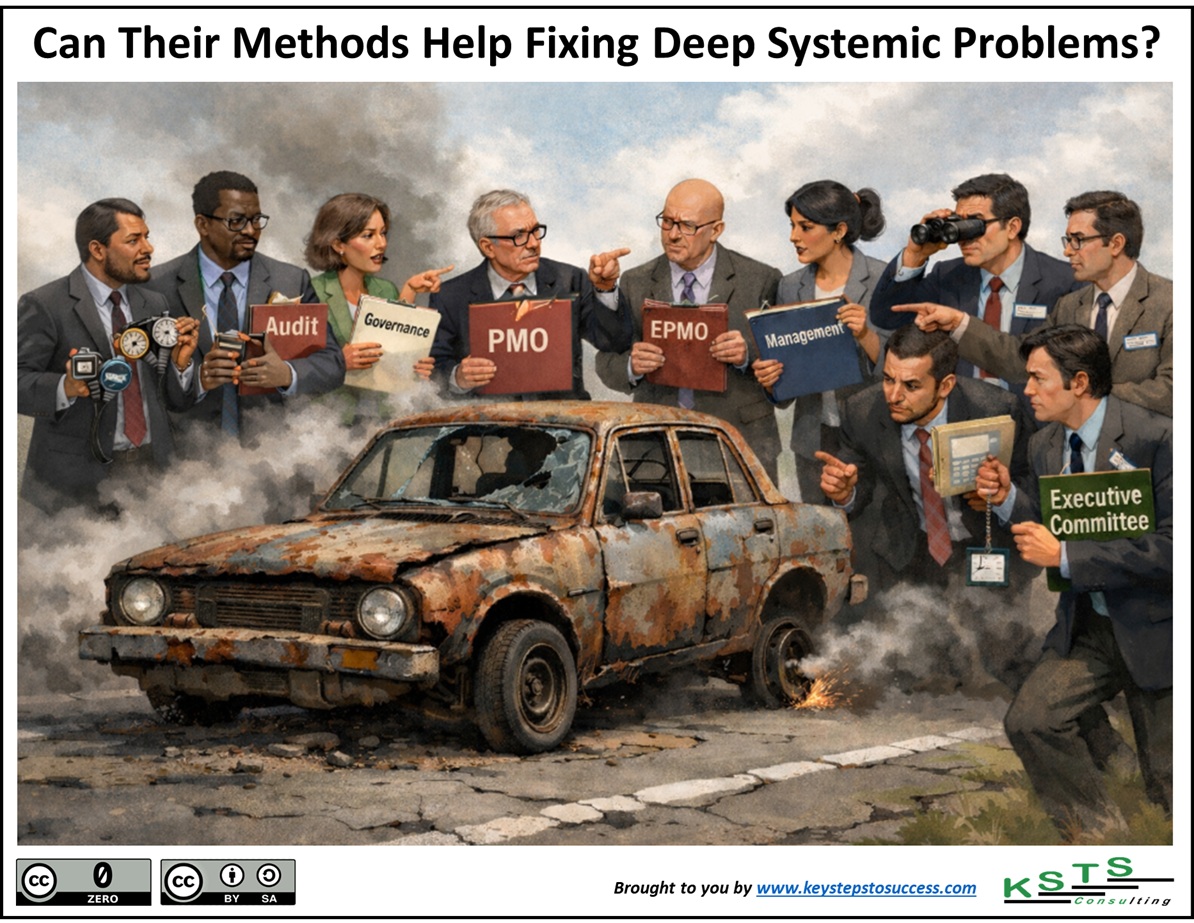
To understand AI’s impact, one must first critically examine the current state of many PMOs. Across industries, PMOs have evolved into structures that prioritize governance artifacts, reporting layers, and control mechanisms over actual value delivery. This manifests in several ways. Organizations burden themselves with excessive documentation, stage-gate approvals, and centralized oversight, believing that more control leads to better outcomes. In reality, this often produces the opposite: slower delivery, fragmented accountability, and reduced responsiveness to change. The underlying issue is not incompetence but outdated thinking. Many PMOs are designed for a world of predictability—a world that no longer exists. When faced with complexity and rapid change, these structures respond by adding more process, more governance, and more roles. This creates a self-perpetuating cycle of bureaucracy. AI does not struggle with bureaucracy—it consumes it. Every report generated, every status update compiled, every dashboard maintained—these are precisely the kinds of tasks AI executes faster, cheaper, and more accurately than humans. The more an organization relies on such mechanisms, the more it inadvertently prepares itself for human displacement.
What AI Is Already Taking Over
The areas where AI is making the fastest inroads are not the core of leadership or strategic thinking. They are the mechanical layers of project management that have long been mistaken for value. Tasks such as status reporting, data aggregation, scheduling updates, and metrics tracking are now effortlessly handled by AI systems. These activities, while historically time-consuming, require little contextual judgment or creativity. They are rule-based, repeatable, and predictable—ideal conditions for automation. Even facilitation of routine meetings, generation of training materials, and answering framework-related questions are increasingly automated. AI can interpret project data, detect patterns, and produce insights in seconds—work that previously occupied hours of human effort. This raises a provocative but necessary question: if a significant portion of a project manager’s time is spent on tasks that AI can perform better, what remains?
The Misconception: AI as an Efficiency Tool
Many organizations approach AI with a dangerously narrow mindset. They see it as a tool to improve efficiency rather than a force that redefines roles. This leads to a common but flawed conclusion: AI will not replace project managers; it will simply make them more efficient. While partially true, this perspective misses a deeper shift. Efficiency gains do not exist in isolation—they change expectations. If AI can perform administrative tasks instantly, organizations will not reward project managers for being slightly better at them. Instead, they will expect project managers to operate at a fundamentally higher level—focusing on areas where AI cannot compete. This is where the concept of intellectual maturity becomes central.
Intellectual Assets vs. Human Resources
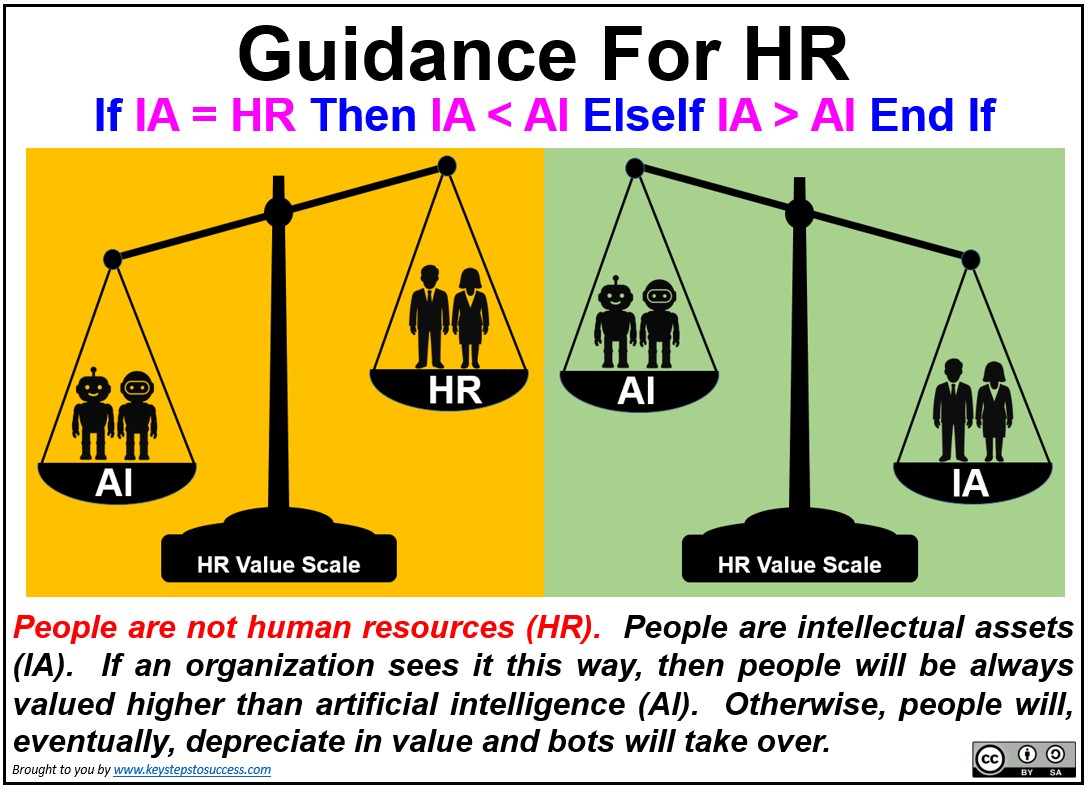
A critical distinction emerges in the AI era: the difference between treating people as “resources” versus recognizing them as intellectual assets. When individuals are viewed as resources, they are measured, optimized, and compared—often directly against machines. In this comparison, AI frequently wins. It is faster, more consistent, and infinitely scalable. However, when individuals are seen as intellectual assets, their value shifts. They are no longer defined by what they do, but by how they think, adapt, and create. Their worth lies in their ability to navigate ambiguity, build relationships, and drive meaningful change—capabilities that remain beyond AI’s reach. This distinction is not philosophical; it is existential. Those who continue to operate as predictable, process-driven “resources” will find themselves increasingly replaced. Those who evolve into adaptive, thinking leaders will become indispensable.
The Collapse of the Traditional Project Manager Role
Historically, project managers have occupied a space defined by coordination, tracking, and reporting. In many organizations, they have acted as intermediaries—translating information between teams, stakeholders, and leadership. This intermediary role is rapidly eroding. AI eliminates the need for translation by making information directly accessible. Real-time data visibility replaces status meetings. Automated insights replace manual analysis. The value once derived from managing information flow diminishes significantly. In some organizational transformations, the role of the traditional project manager has already been redistributed across teams and product-focused roles, eliminating redundancy and reducing friction. This is not merely role evolution; it is role dissolution.
The False Safety Net: Role Rebranding
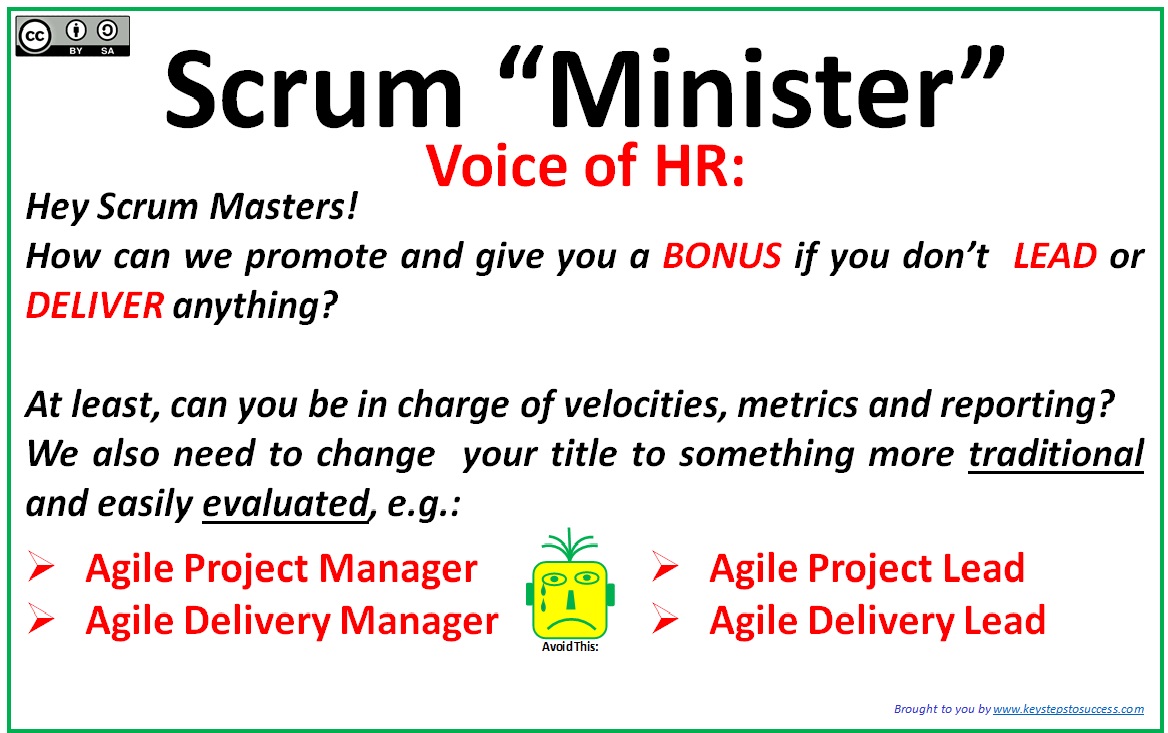
Faced with this disruption, organizations often attempt to preserve roles by rebranding them. Project managers become “Agile Leads,” “Delivery Managers,” or “Transformation Specialists.” But changing titles without changing capabilities is ineffective. If the underlying work remains administrative and process-driven, AI will continue to encroach. Role redefinition must be accompanied by a fundamental shift in expectations—away from coordination and toward capability building, systems thinking, and leadership. Offering superficial role transitions as a “safe landing” for displaced responsibilities does not solve the problem. It merely delays it.
The New Standard: Managers as Capability Builders
In an AI-driven environment, the role of managers undergoes a profound transformation. They are no longer responsible for directing work or monitoring progress. Those responsibilities shift to self-managing teams and intelligent systems. Instead, managers become capability builders. Their primary focus is not on controlling outcomes but on enabling the system that produces those outcomes. This involves developing people, improving organizational design, and fostering environments where teams can thrive independently. This shift demands a level of intellectual maturity that far exceeds traditional management expectations. Managers must understand systems dynamics, identify root causes of dysfunction, and guide organizations through continuous improvement. They must move from managing work to improving the system that does the work.
The Death of Command and Control
One of the most significant barriers to this transformation is the persistence of command-and-control management. This approach, rooted in industrial-era thinking, relies on oversight, compliance, and hierarchical decision-making. In modern knowledge work environments, this model is not only ineffective but actively harmful. It suppresses autonomy, discourages innovation, and reduces organizational learning. AI accelerates the collapse of this model. When machines can handle routine coordination and monitoring, the justification for centralized control weakens. What remains is the need for leadership that empowers, rather than constrains. Organizations that fail to abandon command-and-control thinking will find themselves outpaced by those that embrace adaptability and learning.
The Real Downsides of AI: A Mirror, Not a Threat
Concerns about AI often focus on job displacement, data privacy, and implementation costs. While these are valid, they are symptoms of a deeper issue. AI does not create organizational weaknesses; it exposes them. Poor data quality becomes more visible when AI relies on it. Inefficient processes become more obvious when automation highlights bottlenecks. Misaligned incentives become clearer when systems optimize for the wrong outcomes. In this sense, AI acts as a mirror. It reflects the true state of an organization—its strengths, weaknesses, and underlying assumptions. Organizations that respond by adding more governance or control miss the point. The solution is not to constrain AI but to evolve the system.
The Future: From Projects to Products and Learning Systems
A fundamental shift is emerging in how organizations structure work. The traditional focus on projects—temporary, isolated efforts—is giving way to a product-oriented mindset centered on continuous value delivery. This shift emphasizes long-lived teams, shared ownership, and direct alignment with customer needs. It reduces fragmentation and eliminates the artificial boundaries that projects create. In this model, success is not measured by adherence to plans but by the ability to learn, adapt, and deliver value continuously. AI becomes an enabler of this system, providing insights and automation that enhance—not replace—human judgment.
Raising the Bar: What Will Survive AI
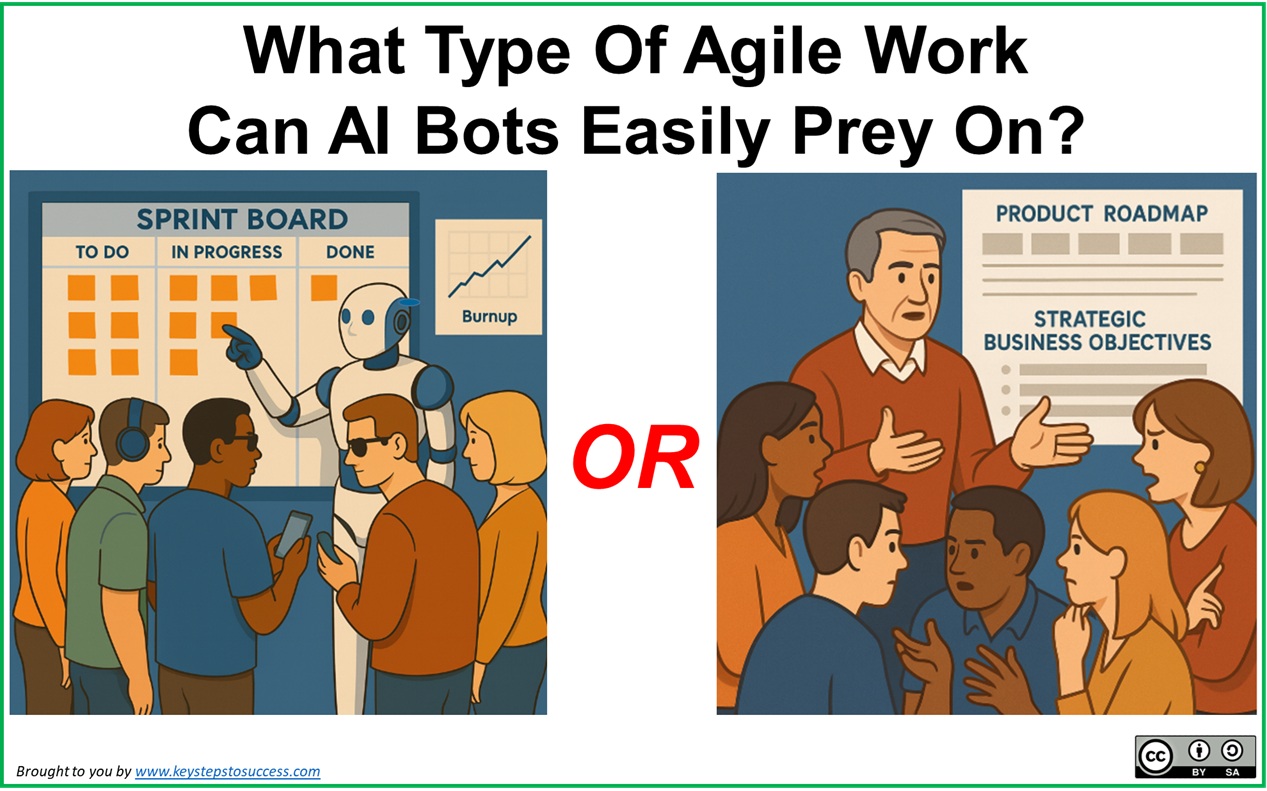
The dividing line between roles that survive and those that disappear is becoming increasingly clear. Work that is predictable, repeatable, and rule-based will be automated. Work that requires deep thinking, creativity, empathy, and adaptability will endure. For project managers and PMO leaders, this means redefining their identity. They must evolve from coordinators to thinkers, from administrators to leaders, from process enforcers to system designers. This is not an incremental change; it is a leap.
A Call to Leadership: Stop Solving Problems with Old Thinking
Many organizations attempt to address their challenges using the same approaches that created them. They add more process to fix inefficiency, more roles to clarify responsibility, and more metrics to improve performance. This is fundamentally flawed. Solving modern problems requires new thinking—thinking that prioritizes learning over control, adaptability over predictability, and people over processes. Executives must invest deeply in understanding these principles. Superficial adoption of frameworks or tools will not suffice. Transformation requires a shift in mindset, supported by education, coaching, and sustained effort.
Conclusion: Adapt or Be Replaced
The rise of AI in project management is not a distant possibility; it is an unfolding reality. It is systematically absorbing the mechanical aspects of work, leaving behind a narrower but more demanding space for human contribution. This space is defined by intellectual maturity—the ability to think critically, adapt continuously, and lead effectively in complex environments. Those who embrace this challenge will find themselves more valuable than ever. Those who do not will struggle to justify their roles in a world where machines perform their tasks better. The future does not belong to those who manage processes. It belongs to those who elevate systems, develop people, and continuously learn. In the age of AI, being “good enough” is no longer enough.